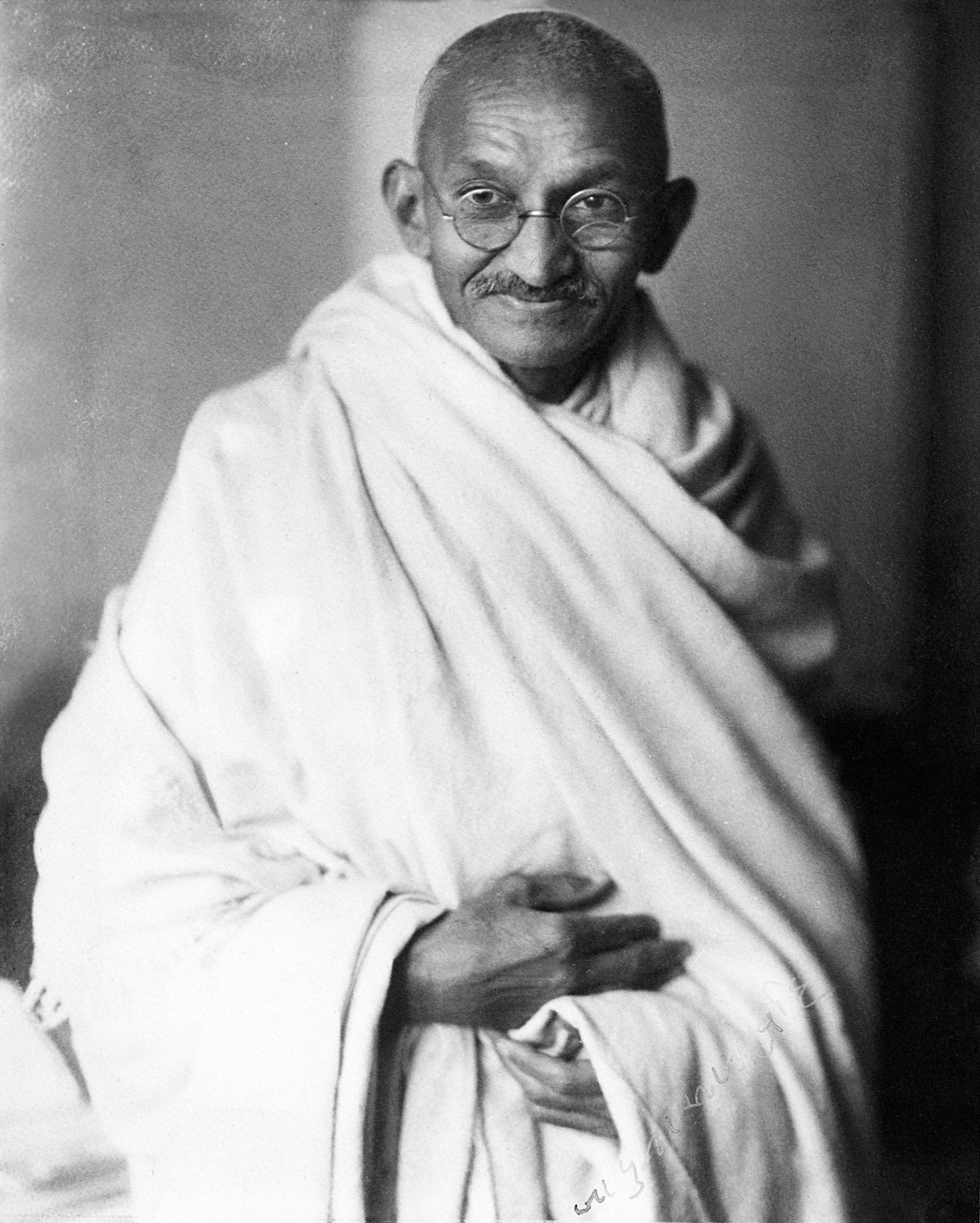
Every year on October 2, India pauses in quiet contemplation and collective gratitude to observe Gandhi Jayanti, commemorating the birth of Mohandas Karamchand Gandhi, revered worldwide as the Father of the Nation. In 2026, this solemn occasion carries added weight: October 2 marks Mahatma Gandhi’s 157th birth anniversary. Beyond India’s borders, the international community simultaneously observes the day as the International Day of Non-Violence, formalised by the United Nations General Assembly to spread the message of peace, tolerance, and human dignity.
At a time when modern society faces acute political polarization, digital discord, and international friction, revisiting the foundations of Gandhi’s philosophy is not an exercise in passive nostalgia. It is an urgent, pragmatic exploration of how moral courage, absolute adherence to truth, and unyielding non-violence can dismantle entrenched injustice without leaving cycles of bitterness in their wake. Readers can explore his transformative life, examine the chronological timeline, review verified quotes, and share original Gandhi Jayanti 2026 wishes.
When Is Gandhi Jayanti 2026?
In 2026, Gandhi Jayanti falls on Friday, October 2, 2026. This date marks the 157th birth anniversary of Mahatma Gandhi, who was born on October 2, 1869. The Government of India’s official calendar and the Department of Personnel and Training confirm the 157th anniversary designation for 2026.
Across all 28 states and 8 Union Territories of India, Gandhi Jayanti is celebrated as an official gazetted national holiday—one of only three along with Republic Day (January 26) and Independence Day (August 15). All central and state government offices, courts, universities, schools, banks, and capital markets remain closed, allowing citizens to participate in memorial gatherings at Raj Ghat in New Delhi, interfaith prayers, and nationwide civic cleanliness drives.
Who Was Mahatma Gandhi?
Mohandas Karamchand Gandhi was born on October 2, 1869, in Porbandar, a small coastal principality in the Kathiawar peninsula of Gujarat. His father, Karamchand Gandhi, served as the chief minister (Dewan) of Porbandar, while his mother, Putlibai, imparted a deeply spiritual, disciplined upbringing influenced by Jain traditions of asceticism, mutual tolerance, and vegetarianism.
In 1888, the young Gandhi sailed to England to study law at the Inner Temple in London. Qualifying as a barrister in 1891, he returned briefly to India before accepting a year-long legal assignment in South Africa with an Indian merchant firm in 1893. That temporary assignment turned into a transformative 21-year campaign against institutionalised racial discrimination.
It was on the cold winter platform of the Pietermaritzburg railway station in June 1893—after being forcibly thrown out of a first-class compartment despite holding a valid ticket—that Gandhi resolved never to accept humiliation as fate. In South Africa, he founded the Natal Indian Congress, established the Phoenix Settlement and Tolstoy Farm, and forged the political doctrine of Satyagraha: the insistence on truth through relentless, self-sacrificing non-violence.
When Gandhi returned to India in January 1915 at the urging of senior nationalist mentor Gopal Krishna Gokhale, he did not rush immediately into politics. Instead, he spent a year travelling across rural India in third-class rail carriages, listening directly to farmers, weavers, and common workers. Within a decade, Gandhi transformed India’s independence movement from an elite urban debate into a colossal, disciplined mass struggle of millions. Complete archives of his writings are preserved at the Gandhi Heritage Portal.
Why Is Gandhi Jayanti Celebrated on October 2?
The choice of October 2 is straightforward and historically sacred: it marks the exact calendar anniversary of Mahatma Gandhi’s birth in 1869. The word Jayanti comes from Sanskrit roots signifying victory, birth, or commemoration of a venerated spirit.
India observes October 2 not merely to count the passage of years, but to renew its constitutional covenant with the ethical values on which the republic was founded. When the Constituent Assembly framed India’s democratic architecture, it drew deep inspiration from Gandhi’s insistence on equality, secularism, the eradication of untouchability, and grassroots village democracy (Gram Swaraj). Celebrating his birthday provides an annual national checkpoint to assess whether our contemporary civic actions match his moral vision.
History of Gandhi Jayanti
During Gandhi’s lifetime, October 2 was quietly observed in his ashrams—first at Sabarmati in Ahmedabad, and later at Sevagram near Wardha in Maharashtra. Rather than grand ceremonies, the day was marked by continuous spinning of homespun cotton yarn (khadi), intensive community sanitation, fasts, and inter-religious prayer meetings where scriptures from the Bhagavad Gita, Quran, Bible, and Guru Granth Sahib were read side-by-side.
Following his assassination on January 30, 1948, the Government of India formally enshrined October 2 as a permanent national day of remembrance. Over the decades, Gandhi Jayanti evolved into a nationwide platform to honour grassroots workers, foster communal harmony, and initiate nationwide social welfare programmes such as the Swachh Bharat cleanliness mission.
| Year | Historical Milestone | National & Global Impact |
|---|---|---|
| 1869 | Birth in Porbandar, Gujarat | Born into a family steeped in ethical discipline and deep compassion. |
| 1893 | Journey to South Africa | Faced institutional racism and developed the foundational method of Satyagraha. |
| 1915 | Return to India | Arrived in Mumbai (now celebrated as Pravasi Bharatiya Divas) to lead rural mobilisations. |
| 1930 | The Historic Salt March | Marched 240 miles to Dandi; directly challenged British tax monopoly through civil disobedience. |
| 1942 | Quit India Movement | Issued the historic call to “Do or Die” at Gowalia Tank Maidan, galvanising India. |
| 1948 | Passing in New Delhi | Martyred at Birla House; his memorial at Raj Ghat remains India’s sacred sanctuary of peace. |
Gandhi Jayanti 2026 Significance
Observing Gandhi Jayanti in 2026 carries distinct relevance. In an era marked by rapid technological disruption, climate vulnerabilities, and geopolitical tensions, Gandhi’s timeless principles offer concrete antidotes to everyday anxieties:
- Truth (Satya): In an age of algorithmic misinformation and distorted narratives, Gandhi’s uncompromising demand that truth must govern private convictions and public discourse is more vital than ever. Discover how this anchors his core life lessons.
- Active Non-Violence (Ahimsa): Non-violence is frequently misunderstood as passive submission. For Gandhi, it was an active force requiring immense bravery—refusing to inflict psychological or physical injury while holding oppressors morally accountable.
- Simplicity & Sustainability (Aparigraha): Decades before modern ecological science quantified global warming, Gandhi presciently warned against consumerist excess, declaring that nature provides enough for human need, but never for human greed.
- Dignity of Labour & Cleanliness: Gandhi insisted that no task was degrading. By cleaning latrines himself and spinning his own cloth, he demolished caste prejudices and underscored that self-reliance begins with hands-on service.
Gandhi and the Philosophy of Non-Violence
The bedrock of Gandhi’s entire worldview was Satyagraha, a compound of two Sanskrit words: Satya (truth) and Agraha (holding firmly). It is often translated into English as “passive resistance,” but Gandhi vehemently rejected that label. To him, passivity was the weapon of the helpless, whereas Satyagraha was the supreme weapon of the morally resolute.
In practical terms, Satyagraha insisted that means and ends are indivisible. One cannot produce a just and democratic society through deceit, terror, or hatred. If the method is contaminated, the outcome is inevitably poisoned. This radical ethical consistency proved that an unarmed populace, grounded in self-control and moral clarity, could stand unyielding before the greatest colonial empire on earth.

Recognising the enduring international vitality of this philosophy, the United Nations General Assembly formally instituted October 2 as the International Day of Non-Violence in 2007 under Resolution A/RES/61/271. The UN resolution reminds all sovereign states that non-violence is not an idealistic slogan, but the most effective instrument for international dispute resolution and sustainable human coexistence.
How Is Gandhi Jayanti Celebrated in India?
Unlike vibrant cultural festivals marked by fireworks and feasting, Gandhi Jayanti is celebrated with contemplative grace, civic action, and community service:
- Raj Ghat Memorial Tributes: The President of India, the Prime Minister, the Chief Justice of India, and cross-party leaders visit Raj Ghat on the banks of the Yamuna River in New Delhi. They lay floral wreaths on the black marble cenotaph, bow in silent prayer, and attend the Sarva Dharma Prarthana (interfaith prayer meeting).
- Swachh Bharat Cleanliness Drives: In recent years, Gandhi Jayanti has become synonymous with national sanitation campaigns. Citizens, school children, and government departments dedicate hours to clean public parks, railway stations, riversides, and neighbourhood streets, honouring Gandhi’s dictum that cleanliness is inseparable from spiritual purity.
- School & College Assemblies: Educational institutions across India organise speech competitions, essay contests, debates, and plays depicting key moments from the freedom struggle. Learn more in our student educational section.
- Promotion of Khadi & Village Industries: Khadi Gramodyog outlets throughout India provide special discounts on Gandhi Jayanti to support rural weavers, self-help groups, and cottage artisans.
Important Lessons From Gandhi’s Life
The richness of Gandhi’s legacy is encapsulated in six enduring virtues that speak directly to our individual everyday lives:
Truth (Satya)
Truth is not merely speaking factually; it is the courage to live in harmony with conscience, even when standing entirely alone against popular consensus.
Non-Violence (Ahimsa)
Refusing to harbour malice or hatred towards adversaries. Transforming conflicts through patience, dialogue, and mutual human dignity.
Discipline (Sanyam)
Mastery over appetites, impulses, and anger. Gandhi proved that great collective political revolutions must be anchored in personal self-governance.
Simplicity (Aparigraha)
Liberating oneself from the tyranny of excessive possessions. Living lightly so that resources remain equitable and sustainable for all.
Service (Antyodaya)
Evaluating every political, economic, and technological decision by its tangible impact on the weakest and poorest person in the room.
Inner Peace (Shanti)
True peace is not the absence of tension, but the presence of active justice and the calm confidence that right will ultimately triumph over might.
Mahatma Gandhi Quotes
Many inspirational quotes circulating on modern social media are either misattributed or loosely paraphrased. Below are authenticated quotations documented in Gandhi’s own published journals, speeches, and collected writings available through the Gandhi Heritage Portal:
“Non-violence is the greatest force at the disposal of mankind. It is mightier than the mightiest weapon of destruction devised by the ingenuity of man.”
“The weak can never forgive. Forgiveness is the attribute of the strong.”
“Truth is the end, love or non-violence the way to it.”
“There is a sufficiency in the world for man’s need but not for man’s greed.”
“The best way to find yourself is to lose yourself in the service of others.”
Gandhi Jayanti 2026 Wishes
Celebrate this special 157th birth anniversary by sharing these thoughtful, original greetings with family, colleagues, and friends, or browse short social media messages:
“On this 157th Gandhi Jayanti, may the virtues of Satya and Ahimsa illuminate your personal and professional journey with wisdom and peace.”
“Wishing you a thoughtful Gandhi Jayanti 2026. May we all find the moral courage to speak truth with gentleness and stand against injustice with dignity.”
“Happy Gandhi Jayanti! Let us remember that true strength lies not in force, but in patience, forgiveness, and selfless service to those around us.”
“May Mahatma Gandhi’s ideals of simplicity, environmental mindfulness, and harmony inspire our communities toward a more compassionate tomorrow.”
“Warm wishes on Gandhi Jayanti 2026. Let us resolve to keep our neighbourhoods clean, our minds clear, and our hearts open to every fellow human being.”
“On the International Day of Non-Violence, let us choose empathy over anger and constructive dialogue over division. Happy Gandhi Jayanti to you and your loved ones!”
“Remembering Bapu on his 157th birth anniversary. May his principle of putting the last person first guide our shared dreams and collective work.”
“Sending warm greetings on Gandhi Jayanti 2026. May your life be enriched with purpose, simple living, high thinking, and inner serenity.”
Short Gandhi Jayanti Messages for WhatsApp & Social Media
Quick, meaningful status messages and one-liners tailored for mobile sharing on WhatsApp, Telegram, Instagram, and LinkedIn:
Gandhi Jayanti 2026 for Students
For students, Gandhi Jayanti is far more than an autumn holiday from school. It offers an invaluable case study in moral leadership, strategic problem-solving, and civil resistance:
First, Gandhi demonstrated how personal self-discipline forms the foundation of public influence. As a young law student in London, he faced self-doubt, stage fright, and cultural disorientation. He developed confidence not through bluster, but through rigorous honesty, meticulous preparation, and daily habits of physical and mental discipline.
Second, Gandhi’s methods influenced major human rights movements across the globe. American civil rights leader Dr. Martin Luther King Jr. explicitly credited Gandhi’s philosophy of non-violent direct action as the primary blueprint for the Montgomery bus boycott and the march on Washington. Nelson Mandela in South Africa, Cesar Chavez with American agricultural workers, and the Dalai Lama in Tibet all drew strategic and moral strength from Gandhi’s experiments with truth.
Third, students can apply Gandhian principles in modern digital spaces: rejecting cyberbullying, questioning viral rumours before sharing them, and practicing digital empathy when encountering dissenting viewpoints. Explore our frequently asked questions for answers to common exam questions.
International Day of Non-Violence
On June 15, 2007, the United Nations General Assembly adopted Resolution A/RES/61/271, declaring October 2 as the International Day of Non-Violence. Sponsored by India and co-sponsored by more than 140 countries, the resolution formally acknowledged the universal significance of Mahatma Gandhi’s life and teachings.
According to the official United Nations mandate, the objective of the observance is to “disseminate the message of non-violence, including through education and public awareness.” The UN document underscores that non-violence does not mean pacifism in the face of tyranny, but rather the principle of active civic intervention, constructive dialogue, and the rejection of physical weapons to resolve disputes.
Every year on October 2, the UN Secretary-General delivers an official message from the United Nations Headquarters in New York, calling on member nations to invest in conflict prevention, peacebuilding education, and international law rather than expanding stockpiles of weaponry.
Frequently Asked Questions
Sources & Further Reading
This editorial guide was researched and cross-verified using verified archival records and official government documentation: