Going viral on YouTube Shorts in 2026 is never guaranteed by a single trick, hack, or mysterious upload schedule. While millions of vertical videos are uploaded every week, creators who consistently achieve massive reach build their success on fundamental principles. You need an immediate first-second hook, practical or entertaining substance, relentless pacing, genuine viewer satisfaction, and disciplined data testing. If your videos are stuck with minimal traction, guessing won't solve the problem. Instead, you need a repeatable workflow that keeps viewers from swiping away and delivers clear engagement signals to the recommendation system. In this guide, we explore ten actionable strategies to help you increase YouTube Shorts views, boost retention, and expand your channel sustainably.
What Makes a YouTube Short Go Viral?
The YouTube Shorts algorithm functions as a continuous feedback loop between viewer behavior and content distribution. When a video appears in the Shorts feed, the platform measures viewer reactions in real time. Rather than relying on a single metric, distribution is influenced by several interconnected factors working together:
- Strong opening: Captures immediate interest before the viewer instinctively swipes upward.
- Viewer retention: Keeps the audience engaged across the entire duration without sudden drop-offs.
- Satisfying payoff: Delivers on the opening promise so viewers feel their time was well spent.
- Rewatch potential: Inspires natural replays through seamless loops, dense facts, or striking visuals.
- Clear topic: Allows both the audience and recommendation system to understand the subject immediately.
- Relevant trends: Leverages popular audio, visual formats, or cultural conversations in a distinct way.
- Audience engagement: Encourages authentic reactions such as likes, thoughtful comments, and shares.
- Consistent testing: Refines concepts based on performance data rather than emotional assumptions.
It is critical to remember that no single metric guarantees virality. Achieving high retention on a confusing video or getting shares on clickbait with high swipe-away rates will not produce lasting momentum. A healthy balance across these factors provides the best foundation for algorithmic discovery.
1. Hook Viewers in the First 1–2 Seconds
In the fast-scrolling Shorts environment, the opening moments decide your video's fate. If you fail to communicate value or spark intrigue instantly, viewers swipe past your content before you even begin your core message. A compelling YouTube Shorts hook pairs spoken dialogue with dynamic on-screen movement to freeze the viewer's thumb.
Here are three original hook examples you can adapt across educational or lifestyle topics:
-
Format A • The Costly Mistake
“You're probably doing this wrong every single morning…”
Addresses a common habit immediately, challenging assumptions and prompting viewers to watch for validation.
-
Format B • The Direct Interruption
“Before you scroll, look at this split-second difference…”
Visually demands focus by pairing a direct verbal pattern interrupt with a high-contrast side-by-side demonstration.
-
Format C • The Efficiency Promise
“Here is the fastest way to cut your editing time in half…”
Promises a tangible, high-value outcome right away without wasting breath on greetings or background context.
Most importantly, your hook must accurately reflect your actual subject matter. Setting up false expectations may prevent an initial swipe, but it leads to immediate mid-video abandonment and negative viewer sentiment.
2. Start With the Most Interesting Part
One of the most common reasons Shorts fail to gain traction is traditional video structure. Long intro animations, company logos, channel greetings, and phrases like “Hey guys, welcome back” kill viewer interest instantly.
Treat your Short like an inverted pyramid. Begin with the dramatic end result, the critical dilemma, a startling statistic, or your most arresting camera angle. If you repaired a broken object, show the flawless finished item for one second before flashing to the initial damage. By showing the final destination first, viewers become invested in learning how you arrived there.
3. Remove Every Unnecessary Second
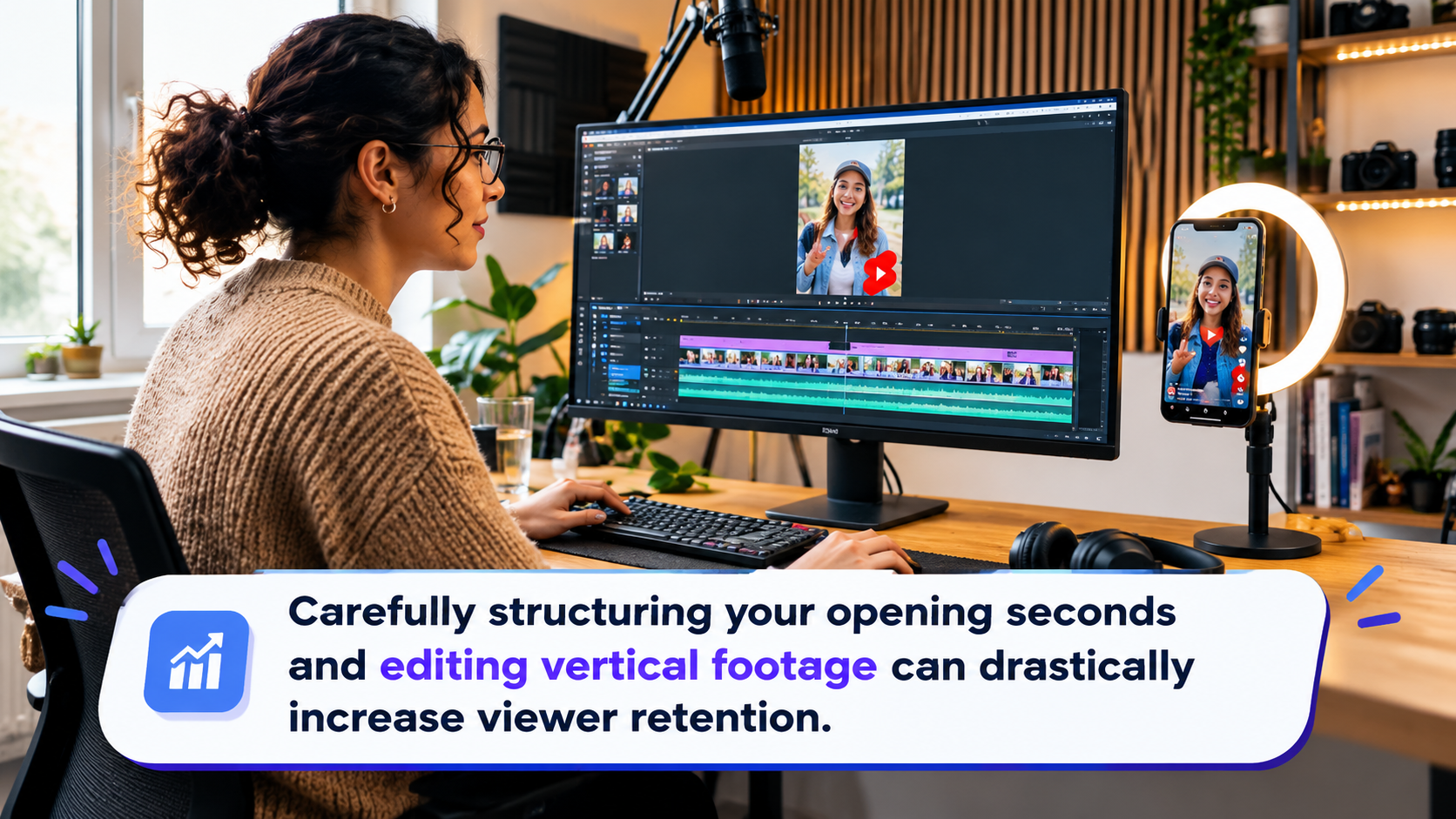
Pacing in short-form video requires ruthless editing. Every pause, breath, redundant word, or stagnant camera frame offers the viewer an exit ramp. To protect YouTube Shorts retention, eliminate pauses using tight jump cuts, introduce subtle zoom adjustments every two to four seconds, and overlay animated, easy-to-read captions.
Prioritize showing over explaining. If you can communicate a transition visually in one second instead of narrating it for five seconds, choose the visual route. However, understand that shorter does not automatically mean better. A 45-second Short packed with substance will outperform a rushed 12-second clip that feels incomplete. Your video should be exactly as long as required to deliver the core idea with maximum clarity.
Creators looking for a simple way to prepare and edit short-form videos can also explore ReelSnip. Trimming dead pauses, formatting 9:16 vertical clips, and streamlining your workflow makes consistent daily production much more manageable.
4. Create Curiosity Without Clickbait
A curiosity gap occurs when you present a fascinating piece of information while holding back the ultimate conclusion until the narrative unfolds. For example, stating “This tiny kitchen tool solved my biggest cooking headache, but not in the way you think” builds genuine intrigue.
There is a profound distinction between curiosity and manipulative clickbait. Curiosity raises an authentic question and provides a satisfying, credible answer by the conclusion. Clickbait, by contrast, exaggerates or fabricates circumstances, leaving viewers feeling cheated. The algorithm tracks audience satisfaction; viewers who feel deceived rarely engage positively or return for future uploads.
5. Make Viewers Want to Rewatch
Replay value can significantly benefit your distribution. When audience members watch a video 1.2 or 1.5 times, it signals that the material is engaging or information-dense.
You can naturally encourage rewatches through deliberate creative formats:
- Seamless loops: Craft your final sentence so it flows grammatically into your opening hook without a visible seam.
- Rapid transformations: Fast-paced before-and-after reveals often cause viewers to replay the video to catch subtle details.
- Surprising narrative twists: An unexpected ending encourages a second view to observe foreshadowing.
- High-density information: Useful cheat sheets, recipe proportions, or visual tips prompt viewers to pause or watch again.
Never rely on cheap tricks like flashing unreadable text for a fraction of a second just to force pauses. Replay value must feel earned through high-quality presentation.
6. Use Trends With Your Own Original Angle
Trending sounds, memes, and visual concepts can expand your reach, but copying another creator frame-for-frame rarely builds a loyal following. Instead, monitor popular formats and adapt them to your specific niche with your unique perspective.
If a popular audio track is circulating, ask how it applies to carpentry, graphic design, personal finance, or whatever topic your channel explores. Furthermore, remember that short-form trends have brief lifespans. If you discover a trend that peaked two weeks ago, your audience will likely view it as stale. Act quickly when a trend aligns with your brand, or focus entirely on evergreen concepts.
7. Optimize Your Title, Description and Hashtags
Proper YouTube Shorts SEO ensures the recommendation engine categorizes your content accurately and serves it to searchers looking for solutions. While the algorithm relies heavily on visual and audio transcription, metadata reinforces your topic.
Keep your title clear, concise, and focused on your primary subject rather than burying it under clickbait phrasing. In your description, provide a brief two-sentence summary incorporating natural keyword variations such as how to get more views on YouTube Shorts or YouTube Shorts ideas. Add 2 to 4 focused hashtags like #shorts and your core topic. Avoid hashtag stuffing; dumping dozens of irrelevant tags clutters your presentation and yields no algorithmic advantage.
8. Test Different Versions of the Same Idea
Professional creators rarely discard a solid content concept after a single underperforming attempt. Instead, they utilize iterative creative testing. If a concept you believed in failed to gain traction, the problem is often the packaging rather than the underlying premise.
Consider recording alternative hooks, testing different opening visuals, adjusting pacing, or experimenting with varied caption aesthetics. You can re-package the same valuable lesson with a completely different introductory question a few weeks later. Pay attention to what the data indicates rather than impulsively deleting videos that start slowly.
9. Study YouTube Analytics
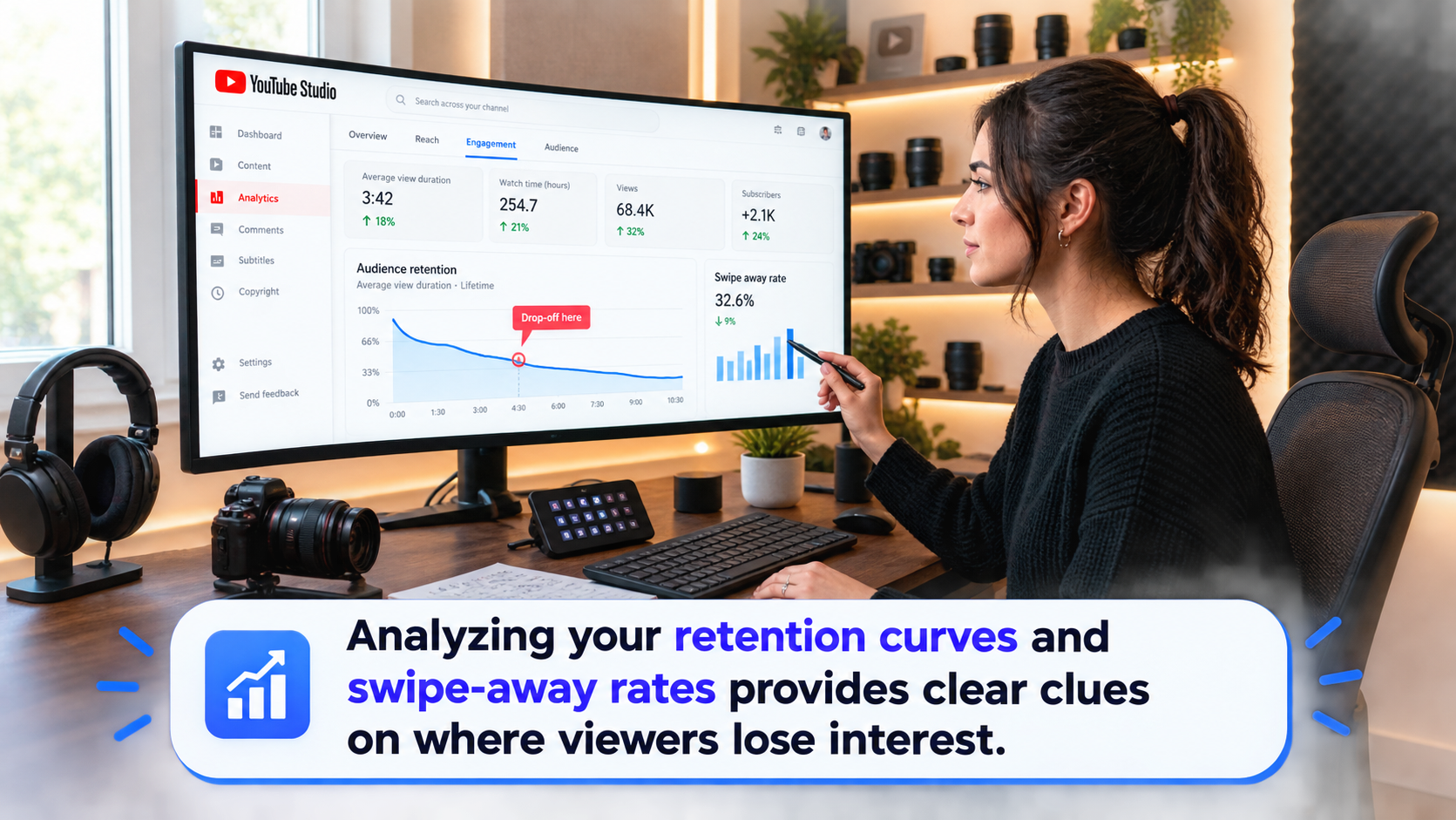
Your YouTube Studio analytics dashboard is your most reliable creative advisor. Rather than obsessing over raw view numbers, inspect the underlying diagnostic metrics:
- Viewed vs. Swiped Away: Evaluates whether your first second effectively hooks passing viewers.
- Audience Retention Graph: Reveals the exact second viewers leave or segments they repeatedly watch.
- Average View Duration (AVD): Measures overall video efficiency and storytelling grip.
- Shares and Comments: Reflects high emotional resonance or conversational interest.
- Subscribers Gained & Returning Viewers: Indicates whether viewers see long-term value in your channel.
Beware of arbitrary advice claiming an exact 85% retention rate guarantees millions of impressions. There is no universal magic percentage; requirements vary by video length, niche competition, and audience scale. Use analytics to compare your own uploads over time and identify specific drop-off patterns.
10. Give Viewers a Reason to Subscribe
Accumulating random views is completely different from building an engaged audience. Because the Shorts feed moves rapidly, viewers rarely inspect a creator's channel page unless given a compelling reason.
Organize your content into serialized series (e.g., “Day 4 of building a micro-SaaS” or “Quick Lightroom Fixes, Part 3”). A recognizable visual style, consistent topic focus, and natural follow-up previews give casual viewers an incentive to tap the subscribe button. Replace aggressive, shouting calls to action with subtle value reminders: “Follow along for part two tomorrow” or “Check our library for the full checklist.”
A Simple YouTube Shorts Formula for 2026
While creative flexibility is vital, having a structured framework prevents wandering scripts and keeps pacing tight. Use this structural blueprint when preparing your next vertical video:
The Visual & Spoken Hook
Interrupt the viewer's scroll with high energy, an unexpected statement, or a bold visual contrast.
The Problem or Curiosity Gap
Define the conflict, mistake, or premise so the viewer understands what is at stake.
The Core Demonstration or Story
Deliver the promised insight rapidly using concise explanations, jump cuts, and screen movement.
The Payoff or Conclusion
Present the finished outcome, core takeaway, or surprising resolution that justifies their watch time.
Seamless Loop or Natural CTA
Tie the closing phrase directly back into the opening sentence or offer a calm invitation to follow.
Note: This is a flexible structural guideline designed to maintain narrative momentum, not a guaranteed mathematical formula for virality.
Example: A 30-Second YouTube Short
Below is a practical, production-ready script demonstrating this formula on the topic: “3 YouTube Shorts mistakes that hurt viewer retention.”
YouTube Shorts Viral Checklist
Before publishing your next video, review this pre-flight checklist to ensure your presentation is optimized for audience retention:
Creator Pre-Publish Checklist
- Strong first-second hook
- Clear, identifiable topic
- No unnecessary intro or logo
- Fast but natural pacing
- Easy-to-read dynamic captions
- Crisp, balanced audio levels
- Relevant, search-friendly title
- Accurate description summary
- Relevant, targeted hashtags
- Clear and satisfying payoff
- Analytics review after 48 hours
- Consistent creative testing
Frequently Asked Questions
Sources & Further Reading
For additional creator insights and niche strategies, consult these authoritative industry resources: